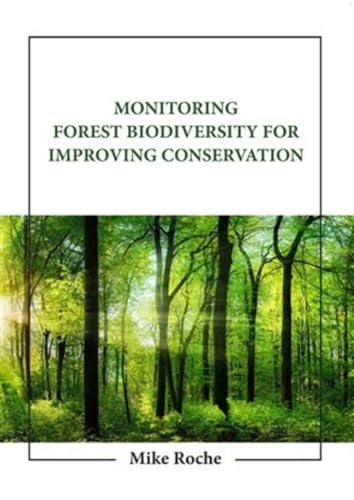
Monitoring forest biodiversity for improving conservation / by Mike Roche.
Material type: TextPublication details: Wilmington, USA : American Academic Publisher , c2024.Description: vii, 276 pages : b&w illus. ; 26 cmISBN:
 - 9781666870305
- Ref 577.3 R58m 2024.
| Item type | Current library | Collection | Call number | Status | Barcode | |
|---|---|---|---|---|---|---|
 Books
Books
|
ASCOT Library - Zabali Campus Reference | Reference | Ref 577.3 R58m 2024. (Browse shelf(Opens below)) | Available | Ref5773004797 |
Browsing ASCOT Library - Zabali Campus shelves, Shelving location: Reference, Collection: Reference Close shelf browser (Hides shelf browser)

|
|

|

|

|

|

|
||
| Ref 577.22 Q44i 2023 C1 Climate change handbook / | Ref 577.22 Q44i 2023 C2 Climate change handbook / | Ref 577.3 Al79f 2023. Forest biodiversity and its conservation practices / | Ref 577.3 R58m 2024. Monitoring forest biodiversity for improving conservation / | Ref 577.7 W31m 2023. Marine ecology: concepts and applications / | Ref 578.77 M36c 2023 Corals and reefs: from the beginning to an uncertain future / | Ref 578.77 W62w 2020. Why study biology by the sea? / |
Includes bibliographical references and index.
Chapter 1. Forest biodiversity. --
Chapter 2. The context of monitoring forest biodiversity. --
Chapter 3. Challenges facing forest biodiversity monitoring. --
Chapter 4. Non wood forest produce in providing livelihoods. --
Chapter 5. Loss of biodiversity and causes in forestry. --
Chapter 6. Management strategies for biodiversity conservation. --
Chapter 7. Forest ecosystem function and dynamics. --
Chapter 8. Ex-Situ conservation.
"There is no evidence of comparable conservation acquisitions in the area surrounding the project that would offer substantial profits from conservation without carbon financing, contrary to the generally accepted practice concerning additionality. In comparison to previous conservation efforts, this is undoubtedly special. Humans gain direct and indirect benefits from biodiversities, such as access to food or other material products, environmental control, lower carbon emissions, and a pause in climate change. The sustainable use of the resource is the primary goal of biodiversity conservation. Tourism is one sustainable economic development method for exploiting biological resources. Forest biodiversity promotes human well-being through various ecological services, including water purification, oxygen provision, and spiritual and cultural advantages. Forest biodiversity is essential to the culture and identity of many indigenous groups. Intact woods can provide a cost-effective "insurance" against the effects of climate change. For instance, if coastal ecosystems are healthy, nature can protect coastal towns from the ravages of storms and natural calamities. Restoring mangrove forests offers significantly more cost-effective protection for expansive coastal areas than complex infrastructures like seawalls and levees, requiring much less upkeep. Providing food, raw resources, and livelihoods for communities, as well as benefiting from biodiversity, are additional advantages. The book will spark interest among scientists, foresters, researchers, environmentalists, and conservationists in preserving and using forest genetic resources in India and Developing Countries." -- Provided by publisher
There are no comments on this title.