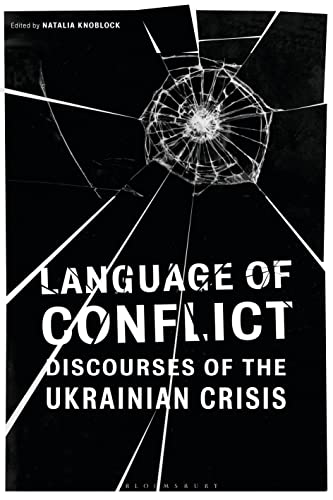
Language of conflict: discources of the Ukrainian crisis / edited by Natalia Knoblock.
Material type: TextPublication details: London, UK: Bloomsbury Academic, c2022.Description: x, 279 pages : figs. ; 24 cmISBN:
 - 9781350192881
- Ref 947.7086 L26l 2022.
| Item type | Current library | Collection | Call number | Status | Barcode | |
|---|---|---|---|---|---|---|
 Books
Books
|
ASCOT Library - Zabali Campus Reference | Reference | Ref 947.7086 L26l 2022. (Browse shelf(Opens below)) | Available | Ref9477004842 |
Browsing ASCOT Library - Zabali Campus shelves, Shelving location: Reference, Collection: Reference Close shelf browser (Hides shelf browser)

|

|

|

|
||
| Ref 910.28 T39i 2023 Introduction to geographic information systems / | Ref 910.285 F85g 2023. Geographic information science and systems / | Ref 910.91 K96c 2023. Coastal marine tourism, planning and development / | Ref 947.7086 L26l 2022. Language of conflict: discources of the Ukrainian crisis / |
Includes bibliographical references, appendix, and index.
Introduction, Natalia Knoblock. --
1. Discourses of Conflict: Cross-Linguistic Corpus-Assisted Comparative Discourse Study of Russian and Ukrainian Parliamentary Debates of 2014, Tatyana Karpenko-Seccombe. --
2. Metaphor, Identity and Conflict in Political Discourse: A Case Study of President Poroshenko and President Putin's Speeches, Liudmila Arcimaviciene. --
3. The Image of the Ukrainian Crisis in the Polish-Language Media in Ukraine, Ewa Szkdlarek-Smiechowicz and Izabela Blaszczyk. --
4. Blended Names in the Discussions of Ukrainian Crisis, Natalia Beliaeva and Natalia Knoblock. --
5. The Antagonistic Discourses of the Euromaidan: Koloradi, Sovki, and Vatniki vs. Jumpers, Maidowns, and Panheads, Olga Baysha. --
6. The Ukrainian Nation - Stepmother, Younger Sister or Stillborn Baby? Evidence from Russian TV Debates and Related Political Sources (2013-2015), Daniel Weiss. --
7. Who are 'They' for Ukrainians in Ukraine and in the Diaspora? Othering in Political Discourse, Natalia Beliaeva and Corinne A. Seals. --
8. Discursive Practices in Online Media: Language Ideologies in Ukraine in a Time of Crisis, Alla Nedashkivska. --
9. Unrecognized Holidays: Old and New 'State' Traditions in the Self-Proclaimed Republics in the East of Ukraine, Yulia Abibok. --
10. Andriy Biletsky's Ukrainian Order: Discourse, Actions, and Prospects of Democracy in Ukraine, Halyna Mokrushyna. --
11. The Art of the Insult: (Re)Creating Zaporizhian Cossacks' Letter-Writing on YouTube as Collective Creative Insurgency, Alla Tovares. --
12. Non-Violent Humorous Resistance to Actual Fear in Texts of Blogs of Post-Maidan Ukraine (Linguistic-Pragmatic Aspects), Yaroslava Sazonova. --
13. Collective Representations of Ukrainian Refugees in the Russian and Ukrainian Press: A 'Burden' or a 'Gain'? Ludmilla A'Beckett
Index.
"Exploring the ways in which language and conflict are intertwined and interrelated, this volume examines the patterns of public discourse in Ukraine and Russia since the beginning of the Ukrainian Crisis in 2014. It investigates the trends in language aggression, evaluation, persuasion and other elements of conflict communication related to the situation. Through the analysis of the linguistic features of salient discourses and prevalent narratives constructed by different social groups, Language of Conflict reflects competing worldviews of various stakeholders in this conflict and presents multiple, often contradictory, visions of the circumstances. Contributors from Ukraine, Russia and beyond investigate discursive representations of the most important aspects of the crisis: its causes and goals, participants and the values and ideologies of the opposing factions. They focus on categorization, stance, framing, (de)legitimation, manipulation and coping strategies while analysing the ways in which the stress produced by social discord, economic hardship, and violence shapes public discourse. Primarily focusing on informal communication and material gathered from online sources, the collection provides insight into the ways people directly affected by the crisis think about and respond to it. The volume acknowledges the communicators' active role in constructing the (often incompatible) discursive images of the conflict and concentrates on the conscious and strategic use of linguistic resources in negative and aggressive communication.
(source: Nielsen Book Data)"-- Provided by publisher.
Text in English.
There are no comments on this title.