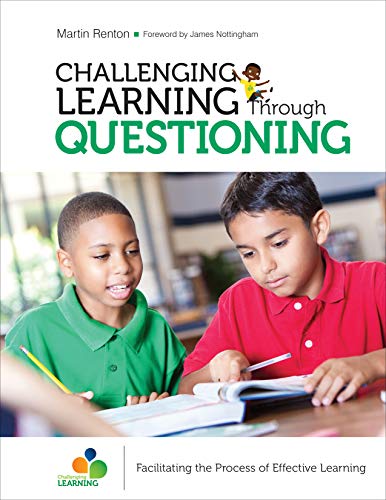
Challenging learning through questioning: facilitating the process of effective learning / Renton, Martin.
Material type: TextSeries: Facilitating the Process of Effective LearningPublication details: Thousand Oaks, CA : Challenging Learning, Ltd., c2020.Description: xxv, 192 pages : b&w illus. , figs. ; 28 cmISBN:
 - 9781506376578
- Ref 371.37 R29c 2020
| Item type | Current library | Collection | Call number | Status | Barcode | |
|---|---|---|---|---|---|---|
 Books
Books
|
ASCOT Library - Zabali Campus Reference | Reference | Ref 371.37 R29c 2020 (Browse shelf(Opens below)) | Available | Ref3713705058 |
Includes bibliographical references and index.
Contents:
Part 1. How to question. --
Chapter 1. Questioning essentials. --
Chapter 2. The basic questioning sequence. --
Chapter 3. Questioning tools: planning effective sequences. --
Chapter 4. Questioning flow. --
Chapter 5. Stay silent (and listen). --
Part II. Questioning and challenge. --
Chapter 6. Thinking about challenge. --
Chapter 7. Questioning activities to challenge thinking. --
Chapter 8. Questioning for challenge. --
Part III. Students and questioning. --
Chapter 9. Students learning to ask questions.
"Questioning is a process that sparks discussion and encourages deeper thinking. Effective questioning builds on students’ natural curiosity, moving them out of their comfort zone and into the learning zone in a purposeful, accessible way. It also models the process of good thinking and fosters a culture of high expectations.
Like any skill, questioning takes practice. With this insightful guide, you’ll reframe your thinking and fine-tune the three essential questioning skills―know your intent, plan your responses, and stay purposefully silent―to elicit noticeably improved responses from students. Features include
· Questioning sequences that work in any discipline
· Techniques for deepening learning through questioning
· Organizational strategies for pair, small-group, and whole-class dialogues
· Best practices for balancing questioning, thinking tools, and strategic silences
· Exercises, activities, and review and reflection sections
High-quality questioning supports a culture in which students are not only challenged, but expect to be challenged, and where they flourish intellectually. Through your questioning, you’ll give them the tools they need to become thoughtful, confident, and independent learners."-- Provided by publisher.
There are no comments on this title.